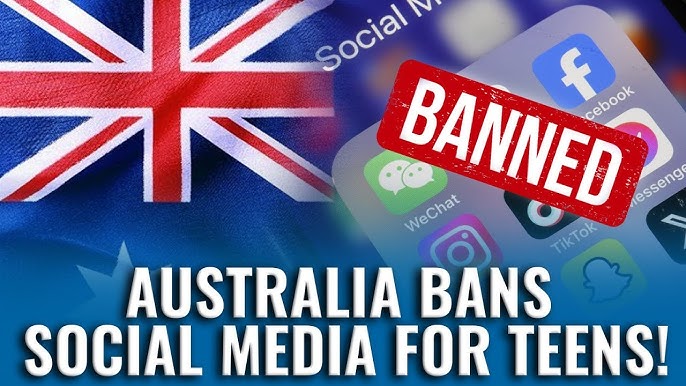
Australia recently decided to ban social media for teens under the age of 16.
At first glance, this sounds like a familiar regulatory move aimed at platforms like Instagram, Facebook, TikTok, Snapchat, or X. That’s how most of us still instinctively define “social media.”
But regulators didn’t stop there. The ban also includes YouTube and Reddit—and that’s where I got curious.
Personally, I don’t use YouTube to “socialize.” I use it to watch news, learn something new through long-form podcasts, or research products before buying them. Similarly, I use Reddit less as a social network and more as a source of honest reviews and “been there, done that” advice you won’t find on polished marketing pages.
As reported by BBC, the government claims the ban will reduce the negative impact of social media’s “design features that encourage [young people] to spend more time on screens, while also serving up content that can harm their health and wellbeing”. In total, 10 platforms were blocked – Facebook, Instagram, Snapchat, Threads, TikTok, X, YouTube, Reddit and streaming platforms Kick and Twitch.
Youtube Kids, Google Classrooms, and WhatsApp were not part of the ban. Also, Roblox and Discord were not included.
The Problem(s) with outright ban
Let’s assume that the regulators have the right intention with putting this into effect. Even with that there’s a whole host of issues with enacting, and more importantly, enforcing such a ban.
First, these platforms aren’t just social anymore. They’re news, search, commerce, and education—often all at once.
Over the past decade, the lines between social media, news, and e-commerce have blurred to the point where the old labels no longer hold. A product review on Reddit competes with Google Search. A YouTube video can replace a newspaper article or a classroom lecture. A TikTok clip can function as both entertainment and a shopping funnel.
Second, these bans are easy to circumvent with access to VPNs, which just ultimately increase the cost for users.
Third, banning a few platforms but not others can shift teens, and in turn, bad actors to other platforms. This is a game of whack-a-mole that you can never win!
Lastly, this has been tried before and failed. Look at what happened in Nepal as recently as a few months ago. The government not only had to roll back the ban but the Prime Minister had to resign amid the protests. The reasons for the ban were somewhat different but the outcome was the same.
A Better Solution
Some companies have already anticipated this shift. Many major platforms offer kid-friendly versions with parental controls such as YouTube Kids. However, in most cases, “kids” is defined as users under the age of 12.
What this new regulation effectively does is formalize a third category – Teens (12-16).
Instead of two groups—kids and adults—we now have three age based user classifications:
- Kids (<12)
- Teens (12–16)
- Adults (16+)
That middle group is the most interesting one.
Teens aren’t children, but they’re also not adults. They consume news, learn online, research products, and form opinions—yet they’re also more vulnerable to addictive design, algorithmic amplification, and privacy risks.
From a product perspective, this creates both a constraint and an opportunity.
I think a better solution here is to create teen specific apps. Think filtered content, stricter privacy defaults, clearer boundaries, higher trust & safety oversights, and lighter – use case based – parental controls.
My prediction: we’ll see more teen-specific products and apps emerge.
- YouTube Teens
- Instagram Teens
- TikTok Teens
Australia’s decision may look like a hard stop on teen usage. In reality, it’s more likely the starting signal for the next wave of product design—one that acknowledges how blurry the digital world has become, and adapts to it rather than trying to force old definitions onto new behaviors.
The thing with social media is that the genie is already out of the bottle. We can’t put it back, so the better approach is learning how to live with it in ways where the benefits outweigh the downsides.
Get freshly brewed hot takes on Product and Investing directly to your inbox!

Leave a Reply